




Plans by the government of Nova Scotia to spend $125 million to help reopen a failed paper mill in Cape Breton could threaten production and jobs in Maine’s struggling paper industry, officials say.
The Canadian mill is a former NewPage Corp. facility in Port Hawkesbury. It makes grades of magazine and catalog paper similar to those of some of Maine’s largest paper makers, including the Verso Paper Corp. facilities in Bucksport and Jay, the Sappi Fine Paper mill in Skowhegan, the UPM-Biofore Company mill in Madison and the NewPage mill in Rumford, which currently is operating under bankruptcy reorganization.
Additional Photos
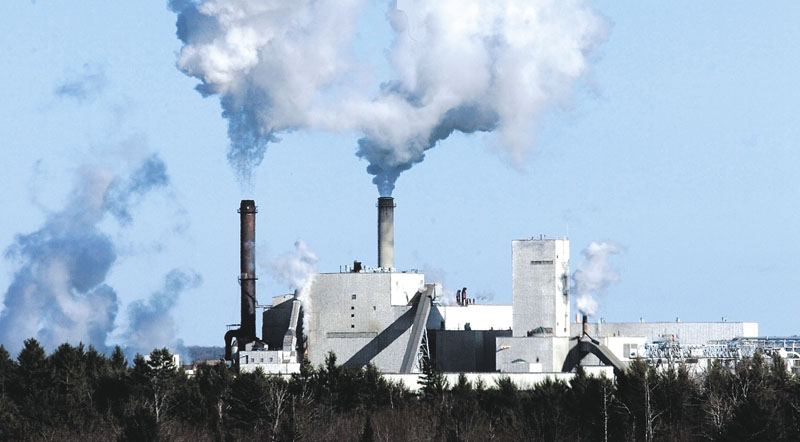
Maine’s industry worries that provincial subsidies that include loans and discount electric rates would let the Canadian mill sell its products at lower prices, at a time when demand for magazine and catalog paper in North America is already down.
“Anytime you put more paper into a market that oversupplied, it’s a threat,” said John Williams, president of the Maine Pulp and Paper Association.
Williams said it’s premature to speculate on the impact, but he doubted the Canadian output would force an entire Maine mill to close. It would be more likely, he said, for mill owners in Maine to idle individual paper-making machines to trim production.
“It could threaten a less-profitable machine that makes a similar grade of paper,” he said.
Williams was reacting to news this week from Nova Scotia that the province had created a financial package to help reopen and support Port Hawkesbury. Tax issues linked to the deal still need approval from the Canada Revenue Agency.
NewPage closed the unprofitable mill last September, putting 600 employees and 400 loggers out of work. More recently, British Columbia-based Pacific West Commercial Corp. bought the mill and plans to restart a streamlined operation. The mill could produce roughly 380,000 tons a year of so-called supercalendered paper, a coated, glossy stock used in catalogs and publications.
This new output would be unwelcome in Maine, where the paper industry has helped shape the state’s economy for more than a century.
Pulp and paper manufacturing employs roughly 7,400 people, who have an average salary of $63,000. And mills pay between 60 percent and 80 percent of property taxes in the towns where they’re located, according to the trade group.
But the industry has been shrinking for years. Employment today is half of what it was a decade ago. Paper production peaked in Maine at more than 4 million tons a year around 1999. It plunged during the recession, and while production has been rebounding, the stalled recovery and shift in advertising from print media to the Internet threatens the long-term growth of coated, supercalendered paper.
Industry figures show, for instance, that consumption of this paper grade in North America peaked at more than 2.1 million tons in 2007. This year, demand is projected to fall to 1.2 million tons, a decline of more than 40 percent.
In Bucksport, the weak demand for coated paper and rising production costs led Verso to shut an older paper-making machine last October. The move eliminated 120 jobs, and took 90,000 tons of paper off the market.
Verso also shut two machines in Sartell, Minn. Earlier this month, Verso announced it would permanently close that troubled mill.
In the short term, the Minnesota closure has helped Maine. Production was transferred to the three operating machines in Bucksport and the four machines at Verso’s Androscoggin Mill, in Jay. Bucksport has an annual capacity of 415,000 tons and has 561 workers; Androscoggin can produce 500,000 tons and employs nearly 900 people.
But the developments in Nova Scotia could threaten this level of production in Maine. Government subsidies will allow Port Hawkesbury to make paper at a lower cost. Putting that paper on the market will have the effect of lowering retail prices, according to Bill Cohen, a Verso spokesman. That could force Verso to cut output here, he said.
“Supply and demand, it’s very simple,” he said. “In a market where we’re already over capacity, it puts more pressure on prices.”
But Memphis-based Verso, which has been losing money, is working on a turn-around strategy, which includes buying a failed competitor and using the facilities to make paper for new customers. In Maine, the company also has been trimming energy costs and branching out into specialty papers, such as packaging.
The company’s survival plan was discussed last week by David Paterson, Verso’s new chief executive officer, in an interview with the Memphis Commercial Appeal. Paterson said he still wants to acquire NewPage’s Rumford mill through the bankruptcy process, even though NewPage spurned the bid and financial analysts question Verso’s ability to make it work.
The Rumford mill has 900 workers. NewPage filed for bankruptcy protection last year and presented a reorganization plan earlier this month.
“Our proposal is for Verso to acquire NewPage in the bankruptcy process,” Paterson told the Memphis newspaper. “We can survive.”
In Skowhegan, Sappi’s Somerset mill operates three machines that make paper for magazines, catalogs and books. A spokeswoman for Sappi’s Boston office said the company declined to comment about the impact of the Nova Scotia investment.
Send questions/comments to the editors.

Success. Please wait for the page to reload. If the page does not reload within 5 seconds, please refresh the page.
Enter your email and password to access comments.
Hi, to comment on stories you must . This profile is in addition to your subscription and website login.
Already have a commenting profile? .
Invalid username/password.
Please check your email to confirm and complete your registration.
Only subscribers are eligible to post comments. Please subscribe or login first for digital access. Here’s why.
Use the form below to reset your password. When you've submitted your account email, we will send an email with a reset code.